Abstract
Veterinary practices face a quiet but persistent challenge: what happens in the hours between a patient’s death and the final disposition of its remains. Storage, transport, and third-party handling each introduce variables that no clinic can fully control. The 30kg Pet Carcass Incinerator addresses this gap directly—not by reinventing combustion science, but by placing a complete, compliant thermal destruction system inside the facility that generates the waste. This article examines the operational logic behind on-site incineration, the engineering that makes a compact unit viable, the regulatory landscape that shapes equipment selection, and the practical conditions under which small and mid-sized veterinary facilities can adopt this approach without overextending their infrastructure or personnel.
- The Biosecurity Gap That On-Site Incineration Closes
- Inside the Design Logic of a Compact Thermal System
- Performance Metrics That Matter Beyond the Brochure
- Regulatory Compliance as a Design Requirement, Not an Afterthought
- Installation Realities: Space, Power, and Personnel
- Maintenance as a Biosecurity Practice
- How Thermal Destruction Compares with Alternative Methods
- What a Clinic in Nairobi Learned from Daily Operation
- Frequently Asked Questions
1. The Biosecurity Gap That On-Site Incineration Closes
Every veterinary facility generates carcasses. Some arrive after euthanasia, others after unsuccessful treatment, and a smaller number represent patients that died before or during examination. In all cases, the remains are a biological material with a defined window of stability. The longer they remain on premises without controlled treatment, the more surfaces, personnel, and air-handling pathways they can influence.
Third-party collection introduces a dependency that clinics often accept without examining closely. A hauler arrives on a schedule that the clinic does not set. The carcass waits in cold storage—sometimes adequate, sometimes not—until pickup. Between the point of death and the point of destruction, the material moves through loading areas, vehicles, and transfer stations, each representing a potential break in containment. For facilities that handle infectious or suspect cases, that interval is not merely inconvenient. It is a biosecurity liability.
On-site thermal destruction eliminates that interval. When a 30kg Pet Carcass Incinerator is integrated into the clinical workflow, the carcass moves from the examination table or cold storage directly into the primary chamber. There is no external queue, no shared transport container, and no dependency on a third party’s operational schedule. The destruction happens under the clinic’s roof, subject to the clinic’s own protocols and the equipment’s engineered controls.
This is particularly relevant for facilities that serve mixed populations: companion animals, wildlife rehabilitation cases, and occasional livestock or equine patients. A single parvo-positive puppy or a suspect rabies case can justify a disposal pathway that does not wait for a scheduled pickup. The unit becomes part of the clinic’s infection-control infrastructure, not an isolated piece of combustion equipment.
2. Inside the Design Logic of a Compact Thermal System
A 30kg-per-cycle incinerator occupies a category that is easy to underestimate. It is small enough to fit a dedicated utility room, yet it must maintain the same combustion principles that govern much larger medical waste systems. The engineering challenge is not scaling down the chamber alone; it is preserving temperature stability, gas residence time, and emission control in a footprint that does not demand a separate building.
Dual-Chamber Construction and Refractory Lining
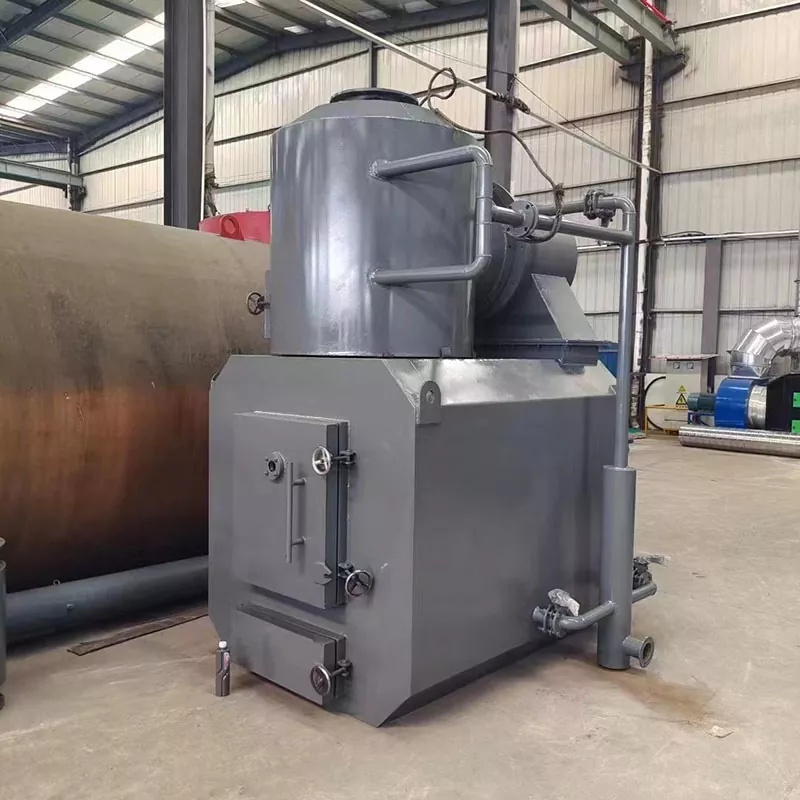
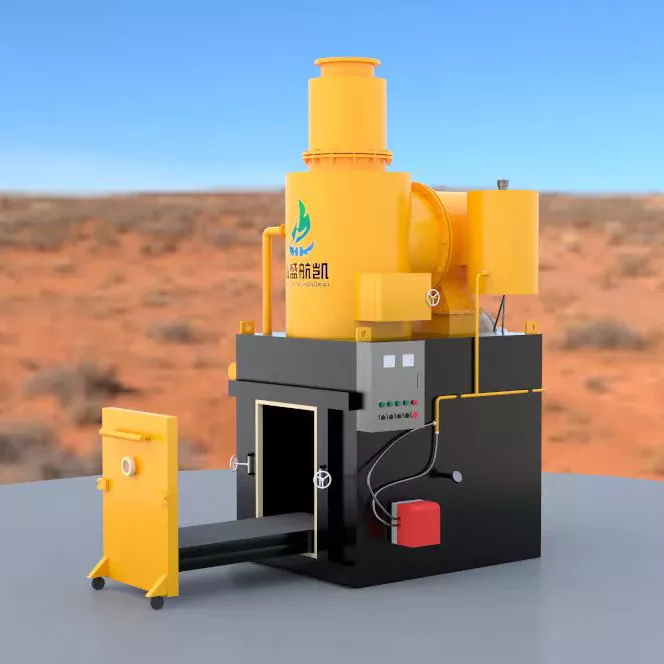
The unit uses a two-stage combustion architecture. The primary chamber receives the carcass and operates within a temperature band that volatilizes organic material. Gases produced in this stage—including products of incomplete combustion—pass into a secondary chamber held at a higher temperature. The secondary chamber is where the destructive work of molecular breakdown continues. Refractory lining in both chambers protects the steel shell from thermal cycling and helps maintain temperature between charges.
This two-chamber arrangement is not optional for facilities that seek regulatory acceptance. It is the baseline configuration for animal carcass incineration under frameworks that distinguish between simple burning and controlled thermal destruction.
Control Architecture and Fuel Flexibility
A programmable logic controller with a touchscreen interface governs the burn cycle. The operator selects a cycle profile, the controller manages fuel modulation, and the system monitors chamber temperatures in real time. Automatic fuel modulation allows the unit to run on diesel or LPG, which matters for facilities in regions where one fuel type is more reliable or more accessible than the other.
Forced-air combustion with adjustable flow rates gives the operator a degree of control over the air-to-fuel ratio. In practice, this is less about fine-tuning for efficiency and more about maintaining stable combustion as the load composition changes—whole carcasses, bagged pathological waste, and contaminated bedding all behave differently inside the primary chamber.
Pollution Control Integrated into the Skid
The pollution-control train is not an external add-on. A dry scrubber with lime injection targets acid gases. A HEPA filtration stage captures fine particulate matter. Activated carbon adsorption addresses dioxins and furans. A water-spray quench system reduces flue-gas temperature before final exhaust. Each component occupies space within the unit’s 1.5m × 1.1m × 1.8m envelope, which is why the system can be installed without a separate air-pollution-control room.
3. Performance Metrics That Matter Beyond the Brochure
Published specifications can create a false sense of precision. A temperature range of 800–950°C in the primary chamber and 1050–1200°C in the secondary chamber tells a facility what the equipment is designed to achieve. The operational question is whether those conditions hold across a full cycle, including the period after the door closes and the load begins to release moisture and volatiles.
The residence time of at least two seconds in the secondary chamber is a critical figure. It represents the duration during which combustion gases remain at elevated temperature, which is directly linked to the destruction of complex organic molecules. Regulatory frameworks in several jurisdictions specify residence times of one second or more at defined temperatures for animal carcass incinerators; a two-second design provides a margin that supports consistent performance across varying load conditions.
| Cycle Time | 45–60 minutes per 30kg cycle |
| Volume Reduction | ≥97% of input volume |
| Ash Residue | <3% of input mass |
| Particulate Matter | <50 mg/Nm³ |
| CO Emissions | <100 mg/Nm³ |
| Dioxins/Furans | <0.1 ng TEQ/Nm³ |
The volume reduction figure is often cited as an operational convenience, but it has a biosecurity dimension as well. A 97% reduction means the residual material requiring final disposition is a small fraction of the original mass. The ash itself is inert and can be handled with standard precautions, but the reduction in volume also reduces the storage burden and the frequency of final disposal activities.
Emission limits for particulate matter, carbon monoxide, and dioxins/furans are not abstract environmental indicators. They determine whether a unit can be permitted in a given location and whether it can operate without triggering odor or visible-emission complaints. A facility that installs a unit meeting these thresholds has a stronger basis for maintaining good relations with adjacent properties and local regulators.
4. Regulatory Compliance as a Design Requirement, Not an Afterthought
Animal carcass incineration sits at the intersection of veterinary practice law, solid waste regulation, and air-quality permitting. The specific requirements vary by jurisdiction, but several themes recur. Secondary chamber temperature and residence time are almost universally specified. Operator training is increasingly mandated for units above certain capacity thresholds. Separation distances from property boundaries, water features, and occupied buildings may apply depending on the installation type.
A unit designed for global markets must anticipate these variations rather than assume a single regulatory context. The 30kg Pet Carcass Incinerator is positioned against WHO guidelines for medical waste treatment, EPA medical waste incinerator standards, and EU Directive 2000/76/EC requirements. These are not interchangeable frameworks, but they share a common emphasis on controlled combustion, emission limitation, and documented operational procedures.
For a clinic evaluating equipment, the practical question is not whether a unit claims compliance in general terms. It is whether the unit’s design parameters—chamber temperatures, residence time, emission controls—map onto the specific requirements of the jurisdiction in which the clinic operates. A facility in a region with strict dioxin limits will place greater weight on the activated carbon stage and the secondary chamber temperature stability. A facility in an area with groundwater sensitivity will focus on ash handling and the integrity of the quench system.
5. Installation Realities: Space, Power, and Personnel
The compact footprint of the unit—1.5m × 1.1m × 1.8m and 380kg empty—is a deliberate design choice, but it does not eliminate the need for planning. A dedicated area of at least 3m × 3m provides clearance for loading, ash removal, and maintenance access. A fire-rated enclosure is recommended, not only for fire safety but also for thermal management and noise containment.
The electrical requirement of 230V/15A is modest compared with larger incineration systems, but it still requires a dedicated circuit. Ventilation at 10 air changes per hour is necessary to manage heat and any trace odors that may escape during door opening. Facilities that install the unit in an existing utility room should verify that the room’s ventilation can accommodate the additional thermal load.
Personnel requirements are similarly modest but not negligible. One trained operator can manage the daily cycle, including loading, monitoring, and ash removal. A weekly maintenance technician handles burner nozzle cleaning, gasket inspection, and safety system testing. The training burden is real: operators need to understand the combustion process, the meaning of chamber temperature readings, and the correct response to abnormal conditions. This is not a push-button appliance, and facilities that treat it as one will experience more downtime and less consistent performance.
- Minimum dedicated area: 3m × 3m
- Power supply: 230V/15A dedicated circuit
- Ventilation: 10 air changes per hour
- Recommended enclosure: fire-rated construction
- Operator: one trained individual per shift
- Maintenance: weekly technician visit
6. Maintenance as a Biosecurity Practice
Maintenance schedules for thermal equipment are often framed in terms of equipment longevity. For a carcass incinerator, maintenance is also a biosecurity activity. A worn door gasket compromises the negative pressure containment that keeps combustion gases inside the chamber. A clogged burner nozzle produces incomplete combustion and higher emissions. A refractory lining that has degraded unevenly creates cold spots where material may not reach the intended temperature.
The daily protocol is straightforward: remove ash, inspect the chamber, and check filter condition. Ash removal is not merely a housekeeping task; accumulated ash can insulate the chamber floor and alter the thermal profile of the next cycle. Chamber inspection catches visible damage before it becomes a larger repair. Filter checks ensure that the pollution-control train is not silently bypassing its intended function.
Weekly tasks—burner nozzle cleaning, gasket inspection, safety system testing—address the components most likely to drift out of specification. Quarterly evaluations of the refractory lining and full system calibration are more involved, but they provide the data needed to confirm that the unit is still operating within its design envelope. A facility that skips quarterly calibration may not notice a gradual decline in secondary chamber temperature until emissions or ash quality reveal the problem.
7. How Thermal Destruction Compares with Alternative Methods
Autoclaving and chemical treatment are often presented as lower-infrastructure alternatives to incineration. Each has a role, but the comparison changes when the waste stream includes whole animal carcasses rather than shredded or packaged clinical waste.
| Pathogen Destruction | 100% (thermal destruction) | 99.9% (autoclave) | 99% (chemical) |
| Volume Reduction | 97% | 0% | 30% |
| Handling of Whole Carcasses | Direct loading | Requires size reduction | Not suitable |
| Regulatory Acceptance | Broad international recognition | Varies by jurisdiction | Restricted in many settings |
| On-Site Feasibility | Compact systems available | Requires steam infrastructure | Chemical handling and disposal |
An autoclave achieves pathogen inactivation, but it does not reduce the physical volume of a carcass. The treated material still requires final disposition, and the presence of intact or partially intact remains can create handling challenges that differ from those of ash. Chemical treatment is effective in controlled settings but introduces a different set of operational requirements, including chemical storage, personal protective equipment, and disposal of treatment residues.
Thermal destruction is unique in combining pathogen destruction with substantial volume reduction and a residual product that is mineralized and stable. For facilities that handle whole carcasses regularly, this combination is difficult to replicate with non-thermal methods.
8. What a Clinic in Nairobi Learned from Daily Operation
A regional health clinic in Nairobi operating with a daily waste volume of approximately 25kg provides a useful reference point. The clinic integrated the unit into its existing waste-management workflow and tracked several outcomes over its first year of operation.
The first change was logistical: weekly waste collection costs disappeared. This was not a marginal adjustment. The clinic had been paying for scheduled pickups regardless of whether the collection volume justified the service. With on-site destruction, the clinic controlled the timing and frequency of carcass processing, and the residual ash required far less frequent removal.
The second change was clinical. The clinic reported a 35% reduction in infection-control incidents. This figure should be interpreted carefully; infection-control outcomes are influenced by many factors, and no single piece of equipment can claim sole credit. However, the reduction is consistent with the logic of eliminating transport and storage handoffs. When carcasses are processed on-site and promptly, the opportunities for environmental contamination and personnel exposure contract.
The third change was regulatory. The clinic achieved full compliance with applicable waste-treatment requirements, which had previously been a source of uncertainty because third-party collection introduced documentation gaps. On-site processing created a clear, auditable record of destruction.
9. Frequently Asked Questions
What types of waste can be processed in this unit?
Can the incinerator operate continuously throughout the day?
What happens to the ash after a cycle?
Does the unit require a dedicated operator?
How does the unit handle odors and visible emissions?
What is the expected maintenance burden for a small clinic?
Equipment selection is only the first step. The operational fit between a thermal system and a clinical workflow determines whether on-site destruction becomes a reliable part of biosecurity practice. Hongsheng supports veterinary facilities in evaluating configuration, installation conditions, and operator training requirements. To discuss how a compact thermal system can align with your facility’s waste profile, Contact Us and share your operational parameters.